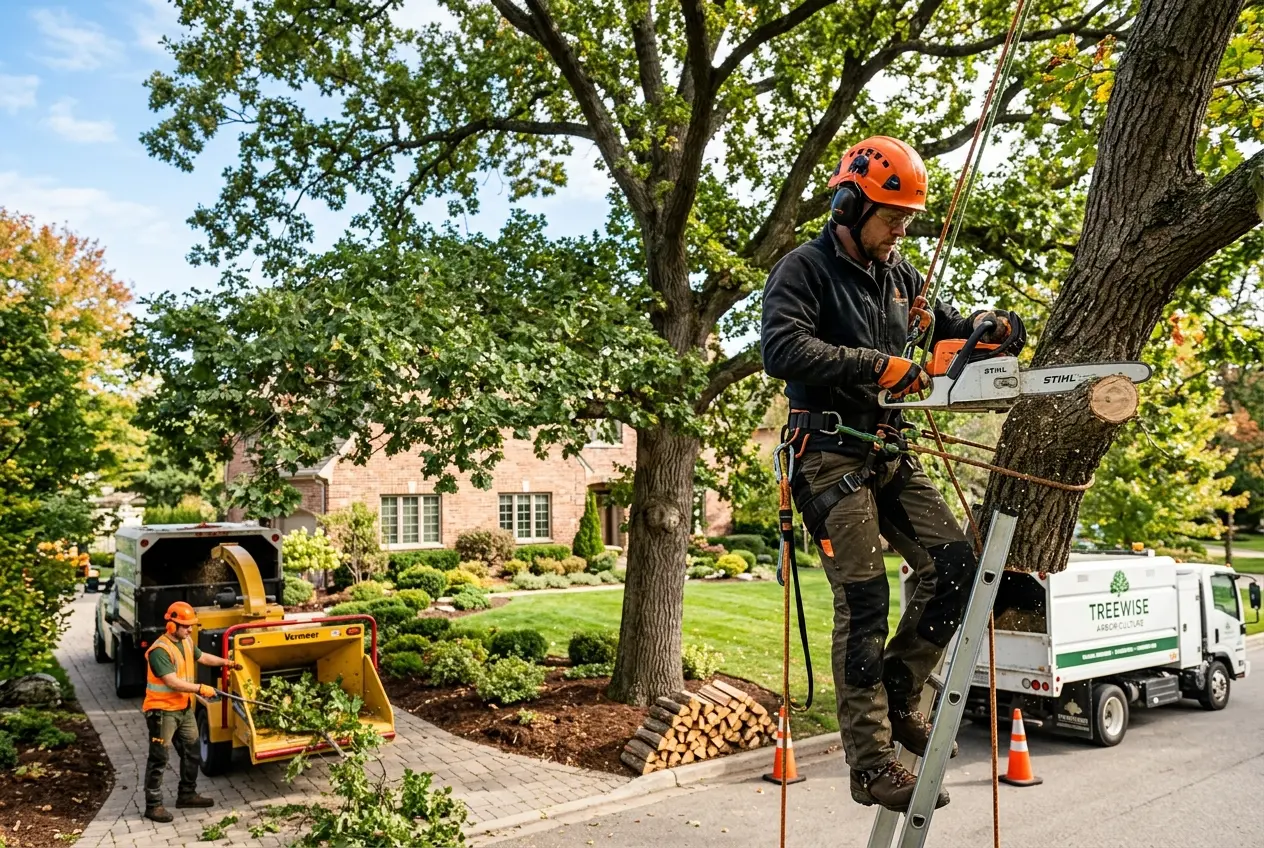
Portland's heritage trees require specialized care - from massive sequoias in the West Hills to flowering cherries in the Pearl District. Our ISA-certified arborists perform crown thinning to reduce wind resistance during winter storms and root collar excavations to prevent rot in our damp climate.
We use climbing techniques instead of bucket trucks when working around delicate historic homes. All pruning follows Portland's urban forestry guidelines and avoids topping practices that create hazardous regrowth. For hazardous trees, we coordinate removal permits with the city's Urban Forestry department.
We use climbing techniques instead of bucket trucks when working around delicate historic homes. All pruning follows Portland's urban forestry guidelines and avoids topping practices that create hazardous regrowth. For hazardous trees, we coordinate removal permits with the city's Urban Forestry department.
Our Process
- 01 Step 1: Tree health assessment
- 02 Step 2: Risk evaluation report
- 03 Step 3: Precision pruning or treatment
- 04 Step 4: Post-care recommendations
Benefits
- Storm damage prevention
- Disease management
- Heritage tree preservation
- Safety hazard reduction
Frequently Asked Questions
When is the best time to prune maples?
In Portland, late summer after leaf drop reduces bleeding and prevents attracting pests common in spring.
How can I protect my trees during construction?
We install root zone fencing and air-spade to prevent soil compaction, following Portland's tree protection standards.